
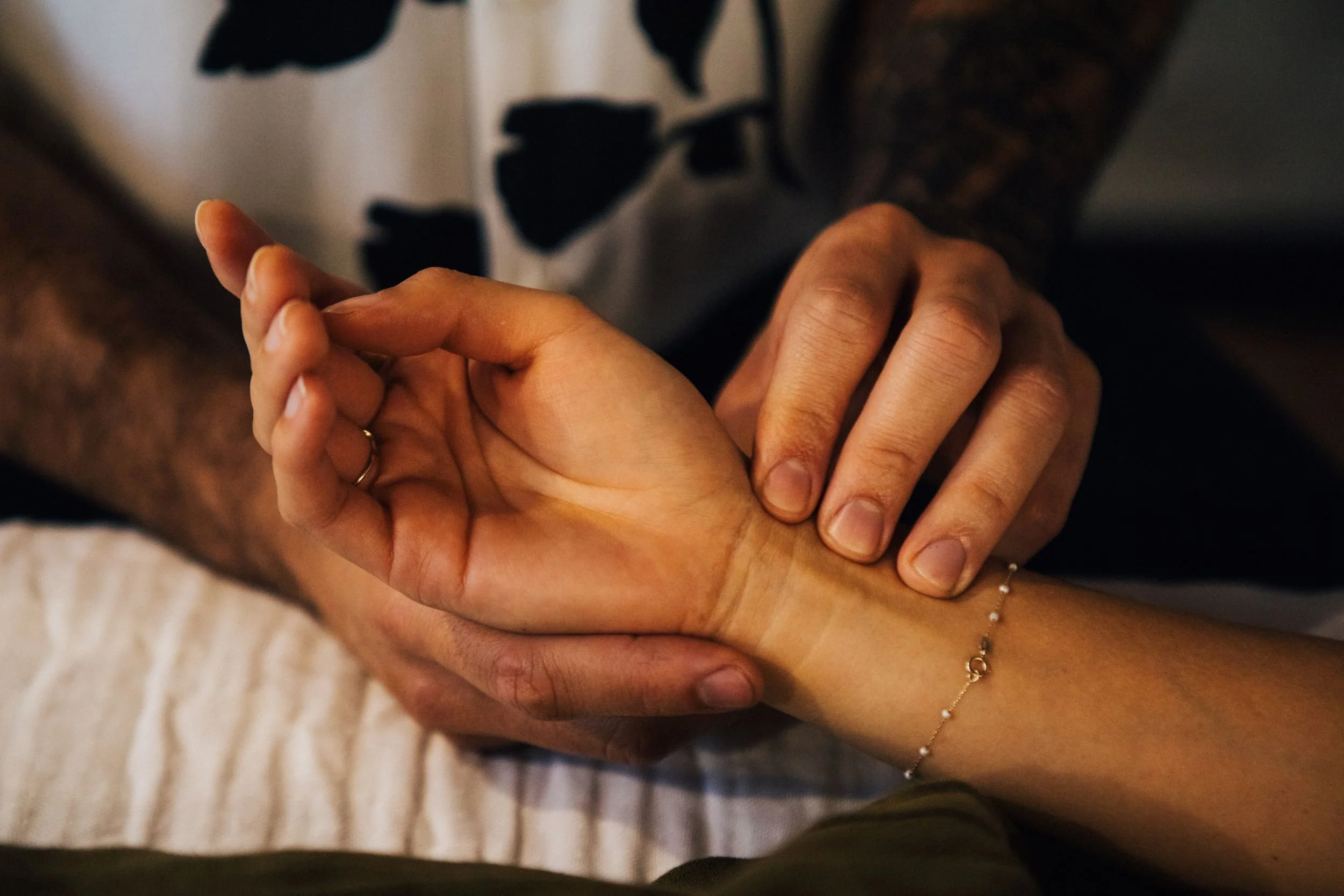
Acupuncture for Trauma & PTSD in San Diego
Classical Chinese Medicine for Deep Healing of Childhood Wounds & Adult Trauma
Trauma doesn't just live in your memory. It lives in your body. In the way you startle at sudden sounds. In the relationships you can't quite commit to. In the chest tightness that appears when you feel vulnerable. In the constant need to stay busy, over-committed, never still. In the parts of yourself you can't access, the emotions you can't feel, the words you can't speak.
You've probably tried talk therapy. Maybe medication for anxiety or depression. Perhaps EMDR or somatic therapies. These can help, and we encourage continuing them. But there's a layer of trauma that words can't reach, a place where the body is holding patterns that were set before you had language, before you could make sense of what happened, sometimes before you were even born.
Gateway Acupuncture & Wellness treats trauma by accessing the deepest channels in your body, the ones that formed in the womb and early childhood, the ones that hold your sense of safety, your ability to bond, your capacity to be yourself in the world. Using Classical Chinese Medicine, particularly the Eight Extraordinary Vessels, we address trauma at the constitutional level where it's actually stored.
How Trauma Gets Stored in Your Body
In Classical Chinese Medicine, there are specific channels that develop during childhood. These are called the Eight Extraordinary Vessels. They're different from the channels that govern your day-to-day functioning. They're deeper, constitutional, foundational. They're responsible for who you are at your core.
Ren Mai develops from birth to about 18 months. This is the channel of bonding, nourishment, connection. It's activated the first time you're placed at your mother's breast, the first time you're held and fed and soothed. Every experience of early caregiving calibrates this channel.
If bonding is interrupted (separation at birth, difficulty breastfeeding, an anxious or depressed caregiver, neglect, early hospitalization), Ren Mai forms with that disruption built in. Years later, as an adult, you struggle with commitment, you feel incomplete without a partner, you're constantly searching for something to make you feel whole, or conversely, you can't let anyone close because bonding feels dangerous.
Du Mai develops from 18 months to about 3 years. This is when you learn to stand, to walk away from your mother and come back, to develop a sense of yourself as separate. This channel governs your sense of self, your ability to individuate, to know who you are independent of others.
If this development is compromised (overprotective parenting, traumatic separation, not being allowed to explore safely), Du Mai can't establish properly. You grow up without a solid sense of self, always adapting to what others want, unable to prioritize your own needs, scattered, over-committed, never comfortable with who you are.
The other Eight Extraordinary Vessels (Chong Mai, Dai Mai, Yin Wei Mai, Yang Wei Mai, Yin Qiao Mai, Yang Qiao Mai) develop through the first seven years for girls, first eight years for boys. Trauma during these foundational years doesn't just create memories. It shapes the channels that determine how you move through the world for the rest of your life.
The Patterns Trauma Creates
Trauma isn't one thing. It creates different patterns depending on when it happened, what happened, and how your body adapted to survive it.
Early bonding trauma (Ren Mai): You struggle with relationships. Either you can't commit, terrified of depending on someone, or you're overly dependent, unable to feel whole without a partner. You might form relationships that recreate the original wound - if your mother was anxious while breastfeeding you, you unconsciously seek partners where love and anxiety are linked because that's what bonding feels like to you. You feel incomplete, like something is always missing, searching for a soul mate to fill the void.
Developmental trauma (Du Mai): You don't have a solid sense of who you are. You adapt constantly to others' expectations. You're over-committed, scattered, too many appointments, too long a to-do list, unable to prioritize. You feel like you're never doing enough, never mastering anything, never reaching your potential. There's a sense of being hollow, empty, uncomfortable in your own skin.
Betrayal trauma (Pericardium Luo): Someone violated your trust, betrayed your spirit, used you, abused you. Your protective mechanism (the Pericardium, which should manage emotions and preserve sanity) was overwhelmed. Now you can't control your emotions. They either erupt inappropriately or you've shut down completely, unable to feel empathy, unable to experience remorse, lying compulsively. Some people develop split personalities, dissociation, the inability to integrate what happened.
Shock trauma (Bladder Luo, PTSD): Something happened that was too much, too fast. An accident, assault, combat, natural disaster, witnessing violence. Your startle reflex is permanently activated. Loud noises make you jump. Your nervous system is stuck in hypervigilance, constantly scanning for threat. The threshold between calm and panic is razor-thin. You have PTSD officially diagnosed, or you just know you're not the same person you were before it happened.
Stored trauma (Yin & Yang Wei Mai): The memory of what happened is lodged in your bones, your muscles, your tissues. You weren't physically injured in the car accident, but you gripped the steering wheel so hard your hands still hurt years later. You can’t escape the past. The trauma is somatized, perhaps living in your body as chronic pain, tension, restricted movement. Every time you're reminded of it, you have to perform a ritual, go for a drive, check the locks obsessively, some behavior that manages the unconscious memory.
Why Your Body Won't Let Go
You want to move on. You've done therapy. You understand what happened. You've processed it intellectually. But your body is still reacting as if the trauma is happening now.
This is because trauma doesn't live in your conscious mind. It lives in the channels that were forming when the trauma occurred. Those channels were literally shaped by the experience. The pattern of holding, the defensive strategy your body created to survive - these aren't conscious. You can't think your way out of them.
Your body is protecting you. The startle reflex, the inability to bond, the chronic tension, the emotional shutdown - these were survival mechanisms. They worked. You survived. But the body doesn't know the threat is over. It's still defending against something that happened years, even decades, ago.
The patterns are physical. In Chinese medicine, we can see them. Emotional trauma for example can create visible vessels on the skin, discolorations, nodules, areas of stagnation. Even certain prominent ridges on the tongue. They can feel them in the pulse. They can be identified based on which channels are holding what patterns. This isn't metaphorical. The trauma has a location in your body, and that location can be treated.
How Classical Acupuncture Treats Trauma
We use the Eight Extraordinary Vessels to address trauma at the constitutional level where it's stored:
Ren Mai treatment reprograms bonding. If your early attachment was disrupted, we can treat the channel that formed during that period. This doesn't erase what happened, but it allows you to form healthy bonds now, to feel complete in yourself, to trust intimacy without the old terror or compulsion.
Du Mai treatment restores sense of self. If you lost yourself, adapted too much, never developed a solid center, Du Mai treatment helps you find who you actually are. Patients describe finally feeling comfortable in their own skin, able to say no, able to prioritize, no longer scattered and over-committed but grounded and clear.
Pericardium Luo treatment releases betrayal. When trust was violated and your protective mechanism was overwhelmed, we bleed the Pericardium Luo point to release that holding. Patients often have profound emotional releases during this treatment - rage they couldn't access, grief that was frozen, the ability to feel again after years of numbness.
Bladder Luo treatment for PTSD. The hypervigilance, the startle reflex, the constant activation - we treat the channel that's holding this pattern. The nervous system gradually learns it's safe to relax, the threshold for panic widens, you can move through the world without constant threat assessment.
Wei Vessels for somatized trauma. When trauma is lodged in your body as an inability to look beyond the past, chronic pain, or restricted movement, we address the channel that's keeping the past manifesting in the present. The pain that had no physical cause begins to release because we're treating the stored memory, not the tissue.
Ghost Points and Heart Pains for the deepest work. For severe trauma, possession-like states, ancestral patterns, or wounds so deep they feel like they've infected your soul, we use Daoist Alchemy treatments like the 13 Ghost Points and 9 Heart Pains. This is advanced Daoist medicine, not appropriate for everyone, reserved for cases where other approaches haven't reached the core. It's powerful, sometimes intense, but transformative for those who need it.
What Treatment Looks Like
Trauma work is different from treating physical symptoms. We're accessing deep constitutional patterns, sometimes touching wounds that have been there since infancy. This requires:
Careful pacing. We don't rush. Your body has been protecting you with these patterns. We respect that. Treatment progresses as fast as your system can integrate, no faster. Some patients need months of preparation before we address the deepest holdings.
Emotional releases. It's common to cry during treatment, to have memories surface, to feel old grief or rage moving through. This isn't re-traumatizing. It's releasing what's been held. We create a safe container for whatever emerges.
Shifts between sessions. Trauma treatment often creates changes that unfold over days or weeks. You might have dreams that process old material. Relationships might shift as you change internally. Symptoms you've had for years might suddenly disappear.
Integration work. We often recommend continuing therapy alongside acupuncture. The two modalities work beautifully together. Therapy helps you make sense of what's releasing. Acupuncture releases what therapy can't reach with words alone.
What Changes Look Like
Trauma healing doesn't always look like you'd expect. The shifts are sometimes subtle, sometimes profound:
The startle reflex quiets. You don't jump at every noise. Your nervous system settles. The constant vigilance decreases. You can relax without feeling like you're dropping your guard.
You can feel again. If you've been numb, disconnected, shut down, feeling starts to return. It might be uncomfortable at first - you've been protected from feeling for good reason. But the capacity to experience emotion, including joy, comes back.
Relationships change. You can commit without terror, or you can be alone without feeling incomplete. You stop recreating the original wound in your choice of partners. You trust differently, more wisely.
Your body releases chronic tension. Pain that had no physical explanation begins to resolve. Tension you've carried for years softens. Your posture changes. You move more freely.
You find yourself. This is what patients describe most often. "I feel like myself for the first time." Not the adapted version, not the traumatized version, not the version trying to please everyone. The actual you that was there before everything happened, or the you that could never emerge because the trauma happened so early.
You can be present. The past stops intruding constantly. You're not always bracing for the next bad thing. You can be here, now, in your life as it actually is.
Most patients notice initial shifts within 4-6 weeks of weekly treatment. Deep constitutional healing of childhood trauma typically takes 4-6 months or longer. Severe trauma or complex PTSD often requires 6-12 months of consistent work. Long alchemy treatments are done in one day and their effects unfold over 6 months. But the changes are real, lasting, foundational.
What Patients Are Saying
"I've been in therapy for years for childhood trauma. I understood everything intellectually but my body was still reacting like I was five years old. Diego's treatments reached something therapy couldn't touch. I can finally be in relationships without constant panic."
— Sarah K., Hillcrest
"The PTSD from combat followed me for a decade. Medications made me foggy, therapy only went so far. After three months of treatment with Diego, the hypervigilance started to ease. I can sleep now without constantly checking the doors."
— Michael R., Coronado
"I didn't realize how much early bonding issues were affecting my adult life until Diego explained Ren Mai. The treatment helped me feel complete in myself for the first time. I'm not constantly searching for someone to fill the void anymore."
— Jennifer L., Pacific Beach
Who This Approach Serves
Classical acupuncture for trauma is particularly effective for people who:
Have childhood trauma affecting adult relationships, sense of self, or ability to feel safe
Experience PTSD symptoms (hypervigilance, startle reflex, flashbacks, avoidance)
Struggle with bonding, commitment, or feeling complete in relationships
Feel disconnected from themselves, scattered, unable to prioritize their own needs
Have tried talk therapy with limited results, feeling stuck despite understanding the trauma
Experience somatized trauma (chronic pain or tension from old wounds with no physical cause)
Carry betrayal trauma that destroyed their ability to trust or feel emotions
Want deep constitutional healing, not just symptom management
Are willing to engage in intensive work and face what they've been avoiding
Your First Visit: What to Expect
Initial Patient Intake & Treatment (80 minutes | $225)
Your first session includes:
Comprehensive trauma history including childhood development, early bonding, significant events, what you've tried before, and what you're hoping will heal
Classical diagnostic assessment using pulse reading to identify which constitutional channels are holding trauma patterns
Discussion of your readiness for deep work, your support system, and pacing that feels safe
Personalized treatment plan addressing your unique trauma pattern (not a generic PTSD protocol, but treatment specific to when and how the trauma occurred)
First acupuncture treatment
Follow-Up Treatments (55 minutes | $180)
Most patients begin with weekly sessions. Trauma work requires consistency and careful pacing. We often start with stabilization (calming the nervous system, improving sleep, building resources) before addressing the deepest holdings. As patterns release and integration occurs, we adjust frequency.
Frequently Asked Questions
Will treatment re-traumatize me?
No. We work at the pace your system can handle. If something feels too intense, we adjust. The goal is healing, not flooding you with more than you can process. Many patients find that acupuncture along with trauma work makes releasing the trauma easier to process. Unhooking the mind and the body from the trauma is a key aspect of healing so speaking your heart is an important part of the process.
How is this different from EMDR or somatic therapy?
These modalities can work beautifully together. EMDR and somatic therapy help your nervous system process trauma. Classical acupuncture addresses the constitutional patterns that were formed during the trauma, particularly early childhood patterns that predate conscious memory. Many patients do both simultaneously.
What if I don't remember the trauma?
You don't need to remember for the treatment to work. If trauma occurred in infancy or early childhood before you could form memories, the pattern is still there in the channels that were developing at that time. We treat what your body is holding, not what your mind remembers.
Can you treat complex trauma or developmental trauma?
Yes. Complex trauma (ongoing abuse, neglect, sexual abuse, multiple traumatic events) often creates patterns in multiple channels. Treatment takes longer because we're addressing accumulated holdings across different developmental stages, but the Eight Extraordinary Vessels are specifically designed to treat constitutional patterns formed in childhood.
What if I'm currently in crisis?
If you're experiencing acute suicidal ideation, active psychosis, or severe destabilization, please seek immediate support through emergency services or crisis intervention. We work with people in recovery from trauma, but we're not equipped for acute psychiatric emergencies.
Do you take insurance?
We operate as a cash-pay practice but provide detailed superbills that you can submit to your insurance company for possible reimbursement. Some insurance plans cover acupuncture for PTSD and trauma-related conditions.
Ready to Begin?
Schedule your initial consultation to explore how Classical Acupuncture can support deep healing from trauma.
Complimentary Consultation: 15 minutes
Initial Intake & Treatment: 80 minutes | $225
Follow-Up Treatments: 55 minutes | $180
Located in Hillcrest, San Diego
Gateway Acupuncture & Wellness
Diego García, L.Ac.
3636 5th Ave, Suite 101
San Diego, CA 92103
Serving: Mission Hills, Mission Valley, Hillcrest, North & South Park, Golden Hill, Normal Heights, Kensington, University Heights, Bankers Hill, Downtown San Diego, and nearby communities.